

JW Speaker EVO-X Headlights: What Actually Changed (And Why It Matters for Real-World Visibility)
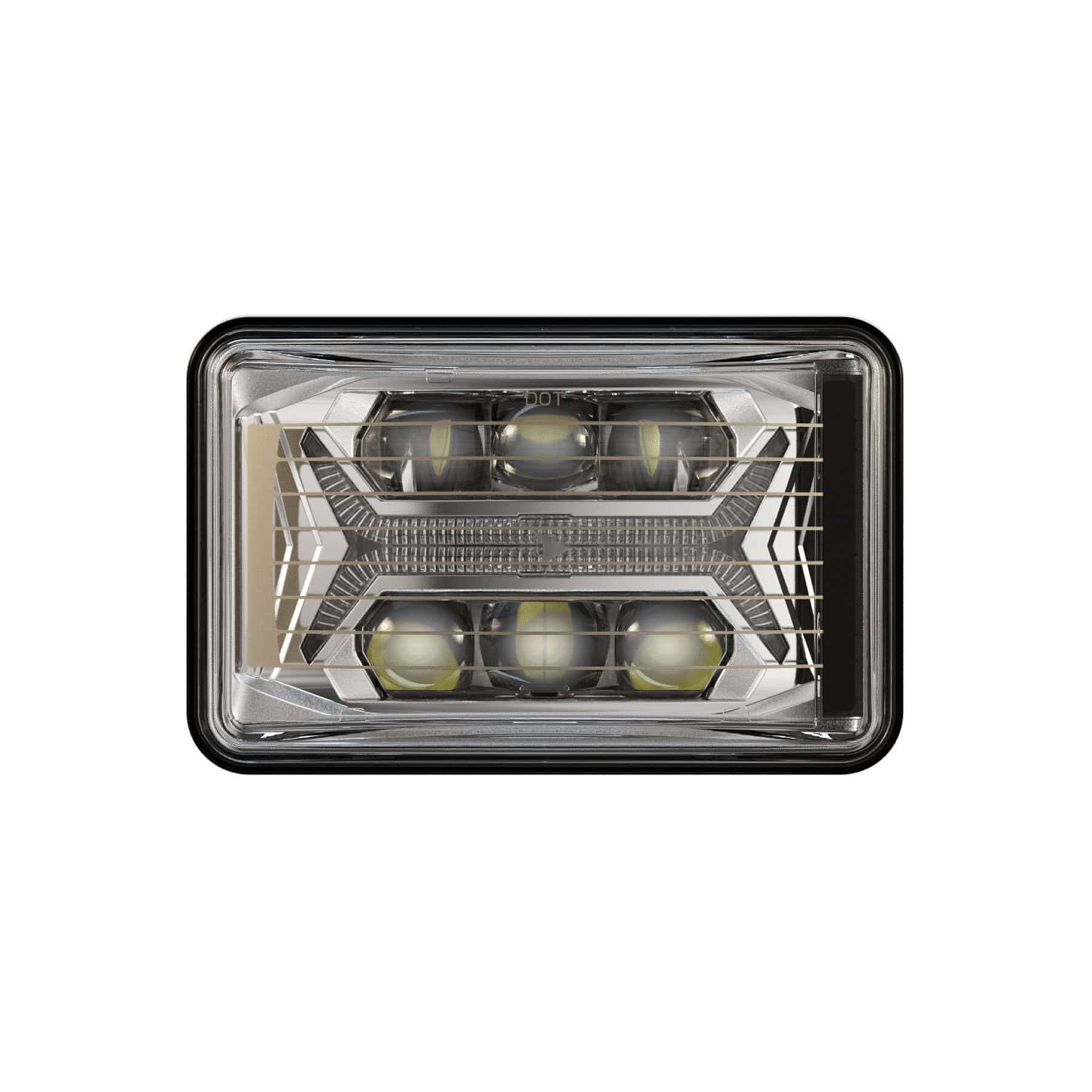
If you’ve been running JW Speaker headlights for years, you already know the Evolution 2 (EVO) platform set the standard. But the all-new EVO-X platform isn’t just an update—it’s a complete shift in how headlight performance is engineered and measured.
This post breaks it down clearly—no fluff, no hype—so you understand exactly what you’re getting and why EVO-X is a true upgrade.
What Is EVO-X? (Platform Overview)
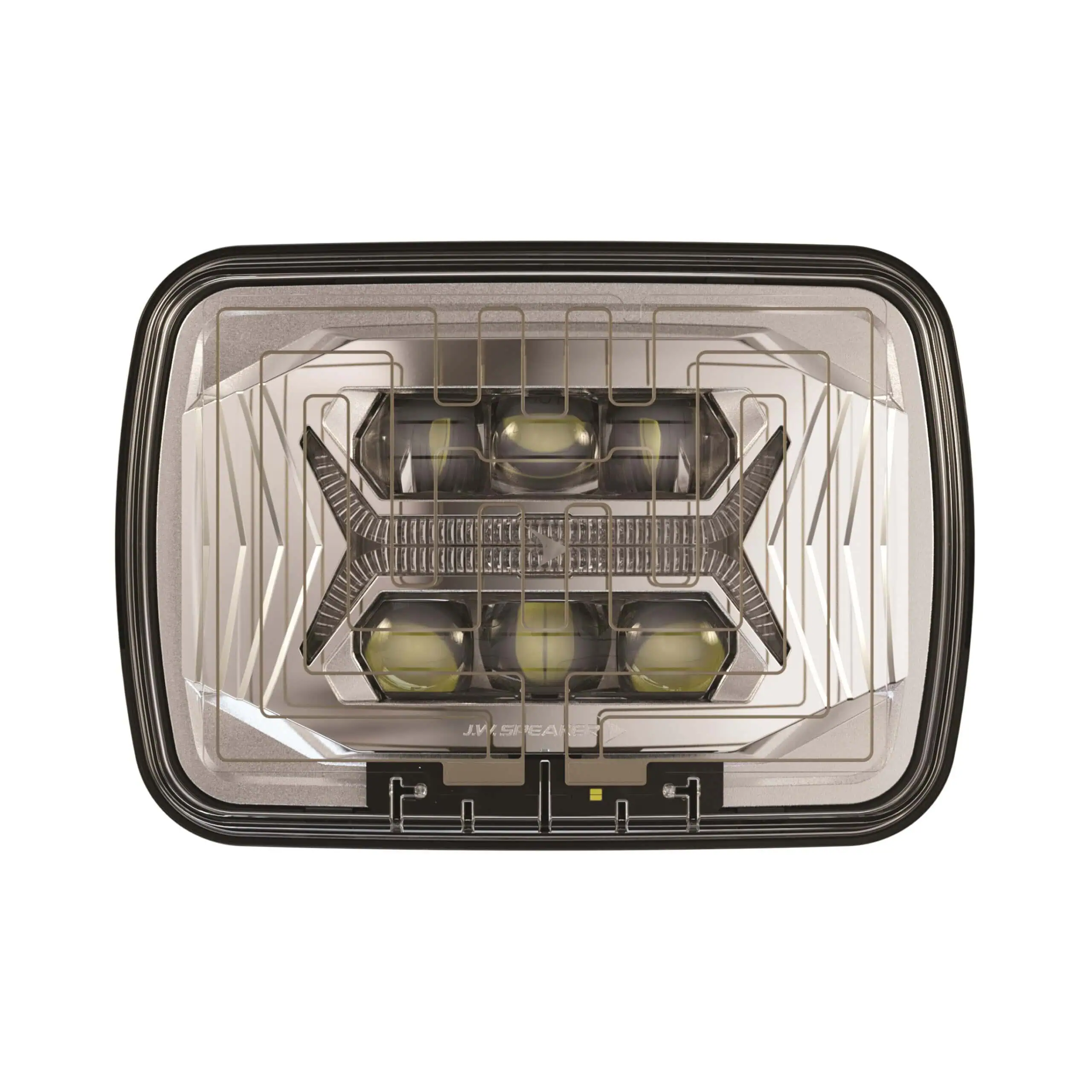
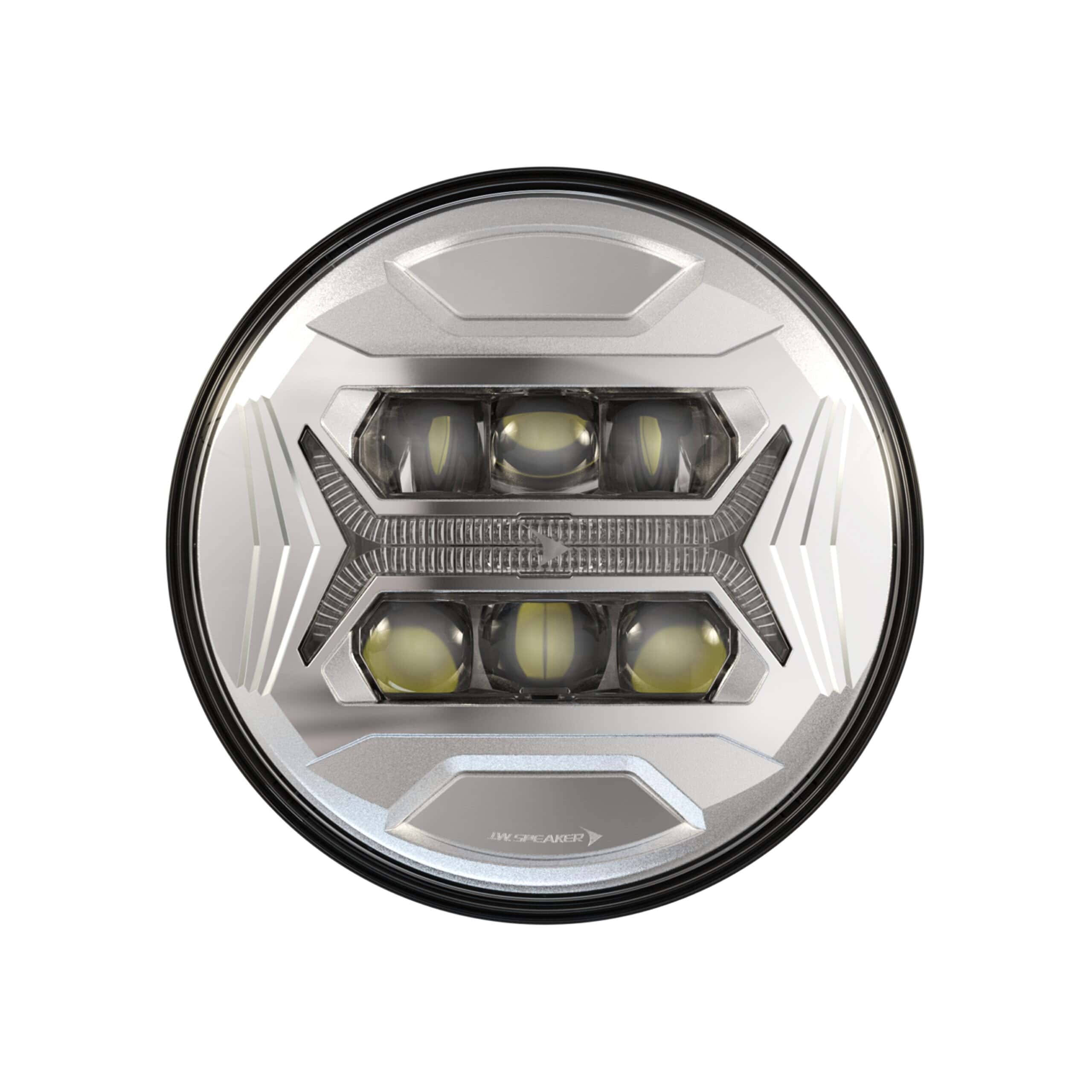
JW Speaker EVO-X is a next-generation LED headlight platform built across all major sealed beam sizes:
- 4×6 (Model 8800)
- 5.75″ round
- 7″ round
- 5×7
It’s designed around:
- Modular optics
- A new “X” optic signature
- Plug-and-play integration
- Consistent performance across platforms
👉 The goal isn’t just brightness—it’s better usable light where drivers actually need it.
EVO vs EVO-X – What Actually Changed?
Let’s get straight to the numbers (Model 8800 4×6 platform):
Low Beam Comparison
- EVO:
- 29,800 candela
- 782 effective lumens
- EVO-X:
- 21,400 candela
- 1,090 effective lumens
High Beam Comparison
- EVO:
- 73,200 candela
- 898 effective lumens
- EVO-X:
- 66,000 candela
- 1,390 effective lumens
What That Means (This Is Critical)
- Candela ↓ (lower peak intensity)
- Effective lumens ↑ (more usable light)
👉 EVO-X is NOT more intense
👉 EVO-X IS more usable
This is the key engineering shift.
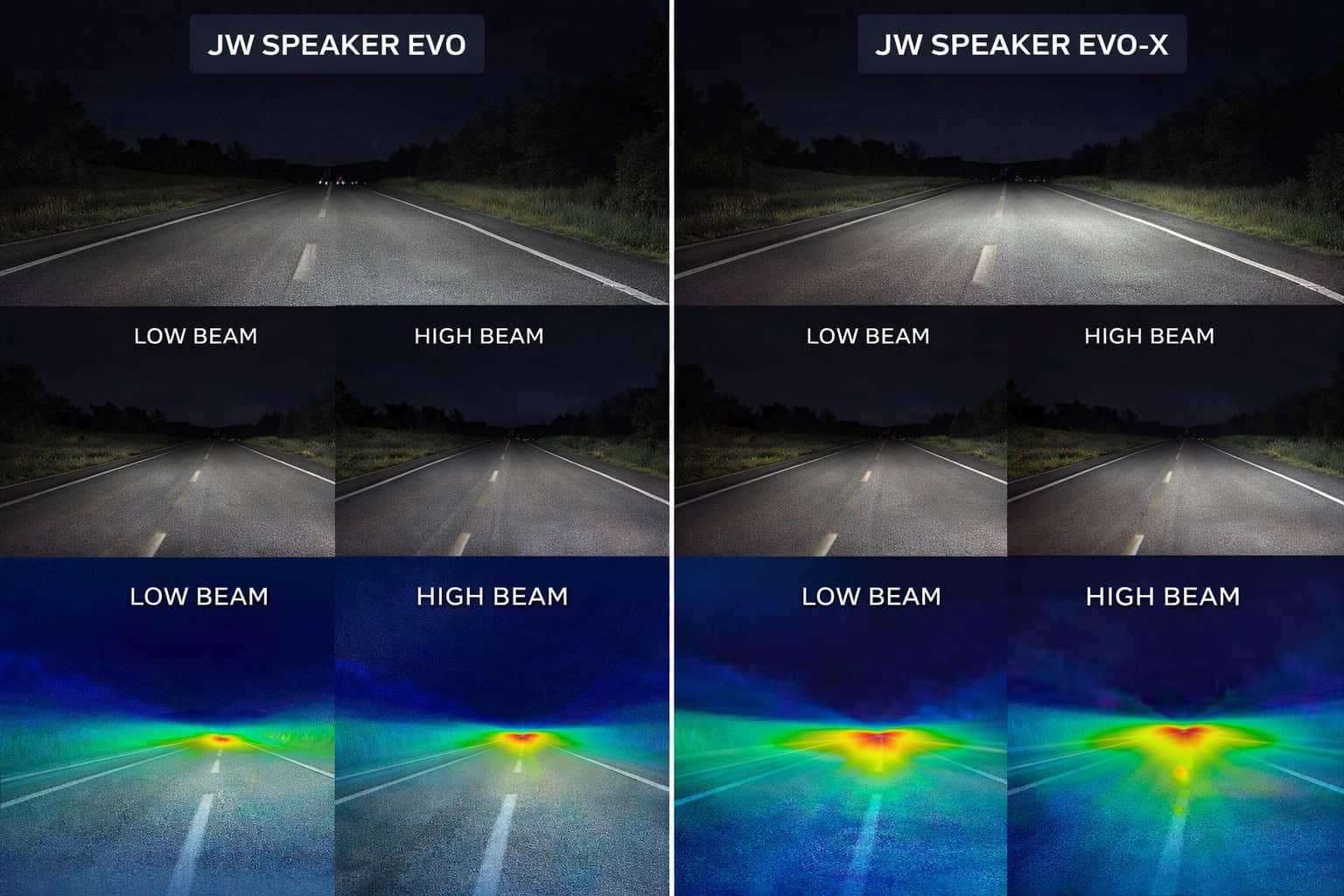
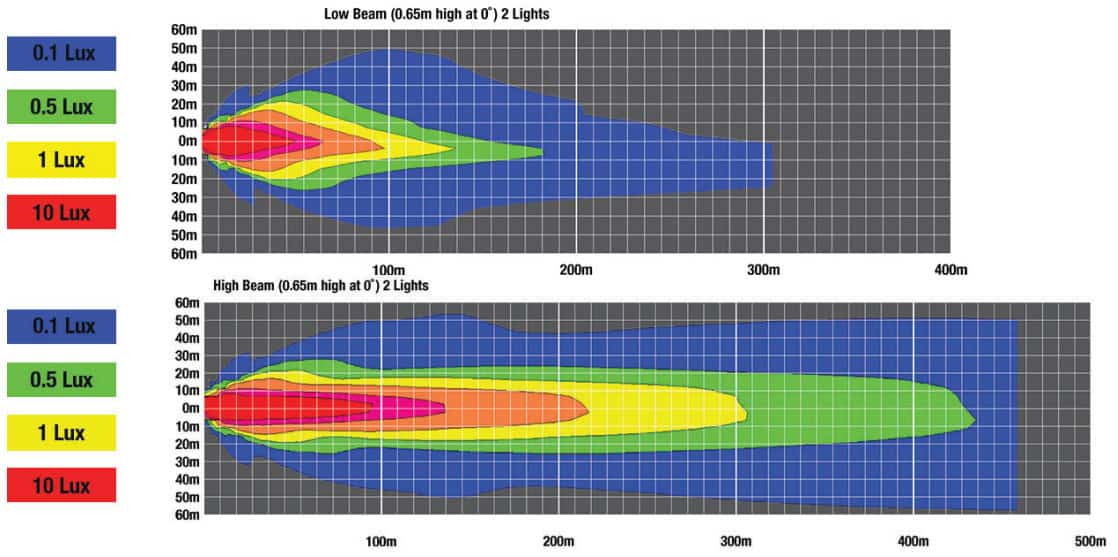
Instead of a narrow hotspot, EVO-X spreads light across:
- The lane
- The shoulders
- The mid-field
Result:
- Wider beam
- Smoother distribution
- Less reliance on a single hotspot
Candela vs Lumens – What Actually Matters?
This is where most competitors completely fail to explain things properly.
Candela (cd)
- Measures intensity in one direction
- Think: hotspot strength
Lumens (lm)
- Measures total light output
Effective Lumens
- Measures usable light on the road
- This is what actually impacts visibility
👉 EVO-X increases effective lumens significantly while reducing peak candela
👉 That means more light where you drive—not just in one bright spot
Real-World Visibility Difference
Here’s what drivers actually notice:
1. Wider Beam Pattern
- More coverage across the full lane
- Better shoulder illumination (huge for rural driving)
2. Reduced Hotspot
- Less eye fatigue
- More consistent lighting
3. Improved Mid-Field Visibility
- Not just distance—usable visibility between 50–200m improves
4. Better Lane Awareness
- Eliminates dark zones and uneven lighting
👉 EVO = strong center punch
👉 EVO-X = complete road visibility
Why EVO-X Looks “Different” (And Why That’s a Good Thing)
Older designs focused on:
- High candela
- Narrow hotspot
- Fast falloff
EVO-X shifts to:
- Wider beam spread
- Smooth transitions
- Balanced light distribution
This is why:
- Peak numbers drop slightly
- But real-world visibility improves significantly
Beam Performance (8800 4×6 Platform)
Low Beam (EVO-X)
- Wider, compliant beam pattern
- Strong foreground + shoulder fill
- Reduced glare
High Beam (EVO-X)
- Increased effective output (+54.8%)
- Strong down-road visibility
- Broader usable coverage
👉 The high beam gains are especially noticeable in real driving conditions
Built for Real Trucks (Not Just Specs)
EVO-X isn’t just about optics—it’s built for real-world trucking:
- Full brightness at low voltage (no dimming issues)
- SmartHeat™ (heated lens for snow/ice)
- IP67/IP69K sealed construction
- H4 plug-and-play compatibility
- Slim profile for standard mounts
Compliance (Important for Buyers)
EVO-X headlights are designed to meet:
- FMVSS 108 (DOT)
- ECE R149 / R148 / R10 (varies by SKU)
⚠️ Important:
- Modified setups (like quad-beam wiring) may not be road legal
- Always verify local regulations before modifying configurations
EVO-X vs Competitors (The Real Edge)
Most aftermarket headlights compete on:
- Raw lumens
- “Brightness” claims
EVO-X competes on:
- Beam engineering
- Usable light distribution
- Real-world performance
👉 That’s a massive difference—and why it stands out.
Who Should Upgrade to EVO-X?
EVO-X is ideal for:
- Owner-operators driving long distances at night
- Fleet trucks needing consistent, reliable lighting
- Rural and highway drivers needing shoulder visibility
- Anyone upgrading from halogen or older LED designs
Final Verdict: EVO-X Is a Visibility Upgrade—Not a Spec Sheet Trick
If you’re comparing purely on candela, EVO-X might look like a downgrade.
It’s not.
👉 It’s a smarter beam design
👉 It delivers more usable light
👉 It improves real-world visibility where it matters most
That’s the difference between:
- “Bright headlights”
and - “Better headlights”
Frequently Asked Questions About EVO-X Headlights
Are EVO-X headlights brighter than EVO?
Not in peak intensity—but they provide significantly more usable light across the road, which improves real visibility.
Why is candela lower on EVO-X?
Because the beam is spread wider instead of concentrated in a hotspot, reducing glare and improving overall coverage.
What makes EVO-X better for trucking?
Wider beam patterns, better shoulder visibility, and more consistent light distribution for long-distance driving.
Do EVO-X headlights improve night driving?
Yes—especially in rural conditions where peripheral visibility and mid-field lighting matter most.
Are EVO-X headlights plug-and-play?
Yes, they are designed for plug-and-play installation in standard housings (varies by vehicle).
Are EVO-X headlights DOT legal?
Yes, when installed as intended. Modified configurations may not be road legal—check local regulations.
Bottom Line
EVO-X isn’t about chasing higher numbers.
It’s about:
- Better beam control
- More usable light
- Real-world performance gains
And that’s exactly why it’s the next step forward in truck lighting.