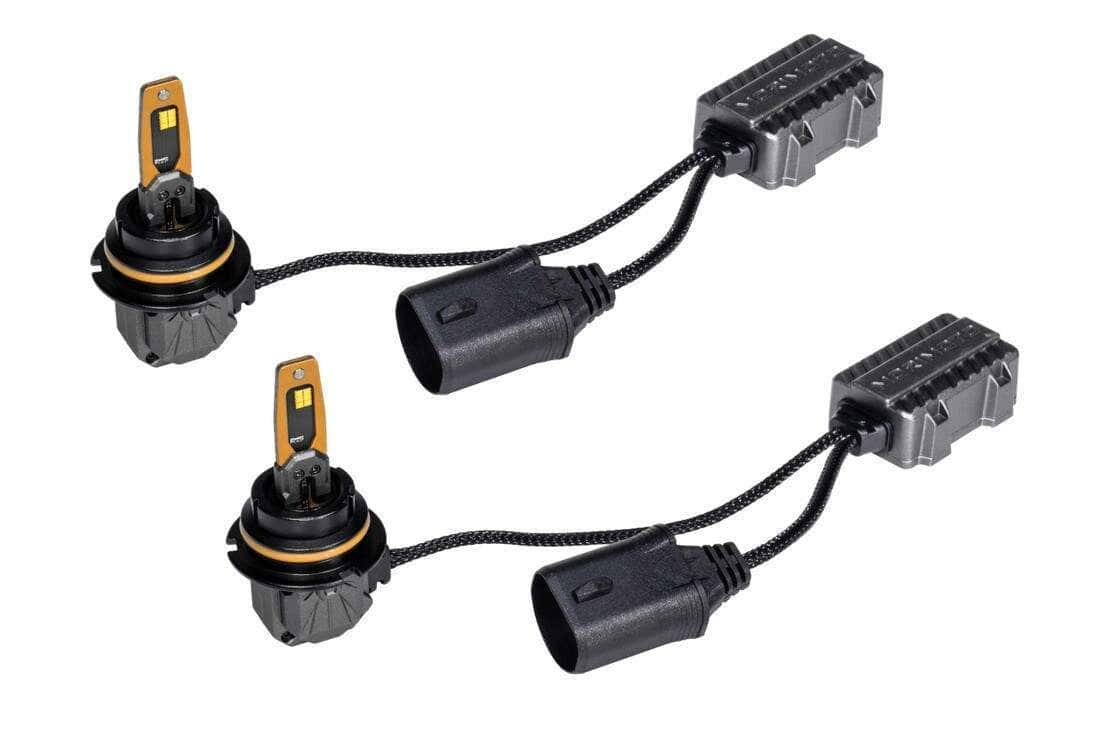



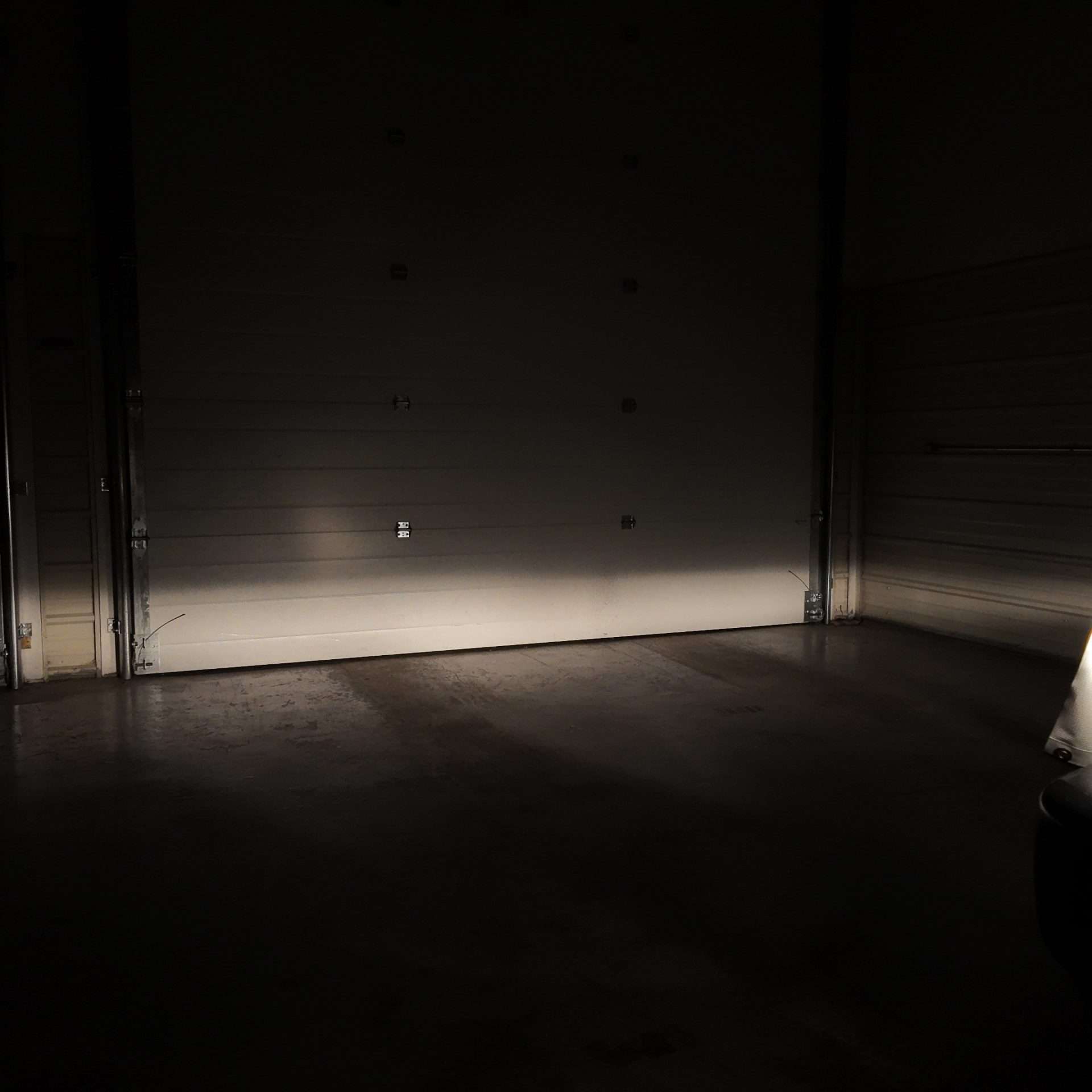
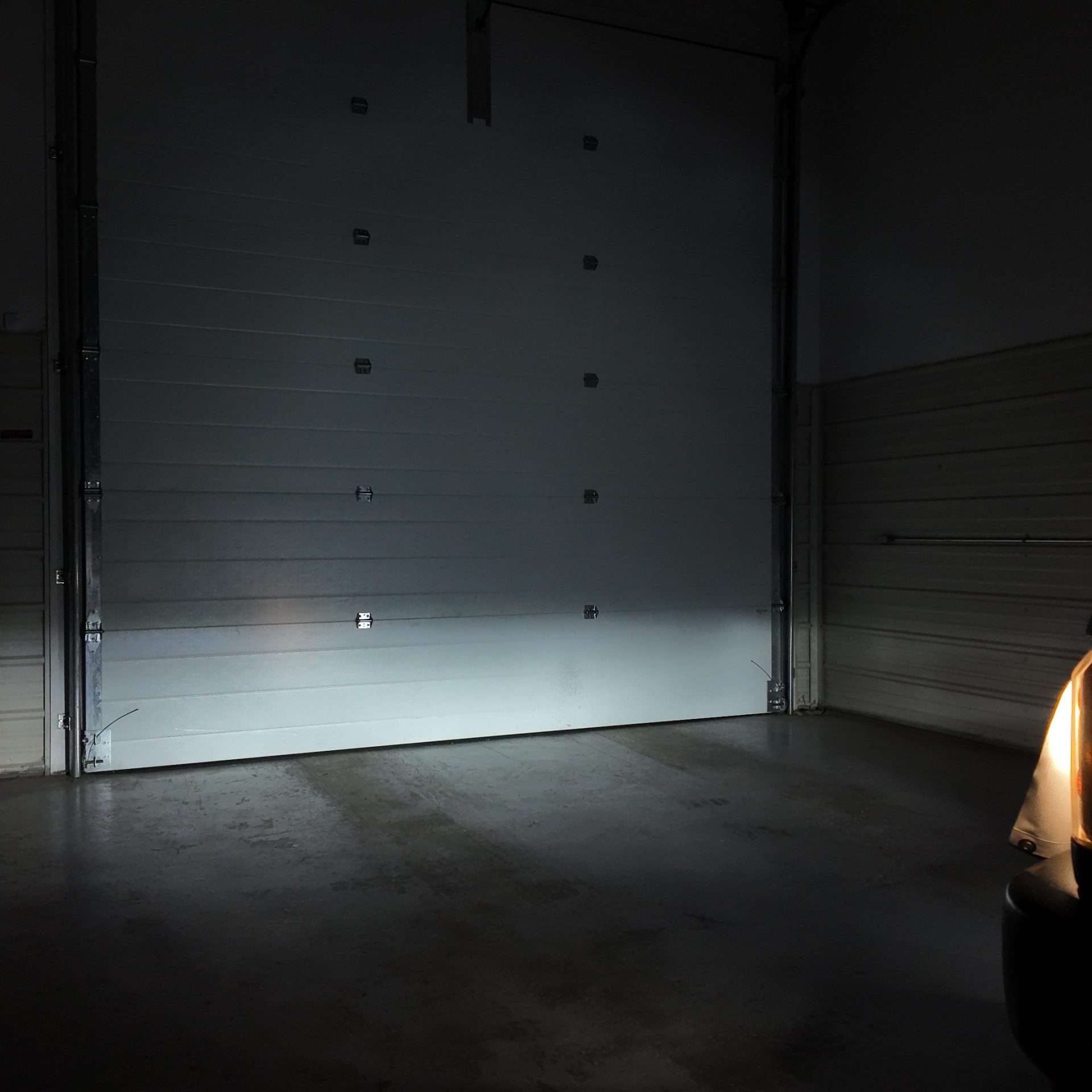
Why Choose AlphaFit?
-
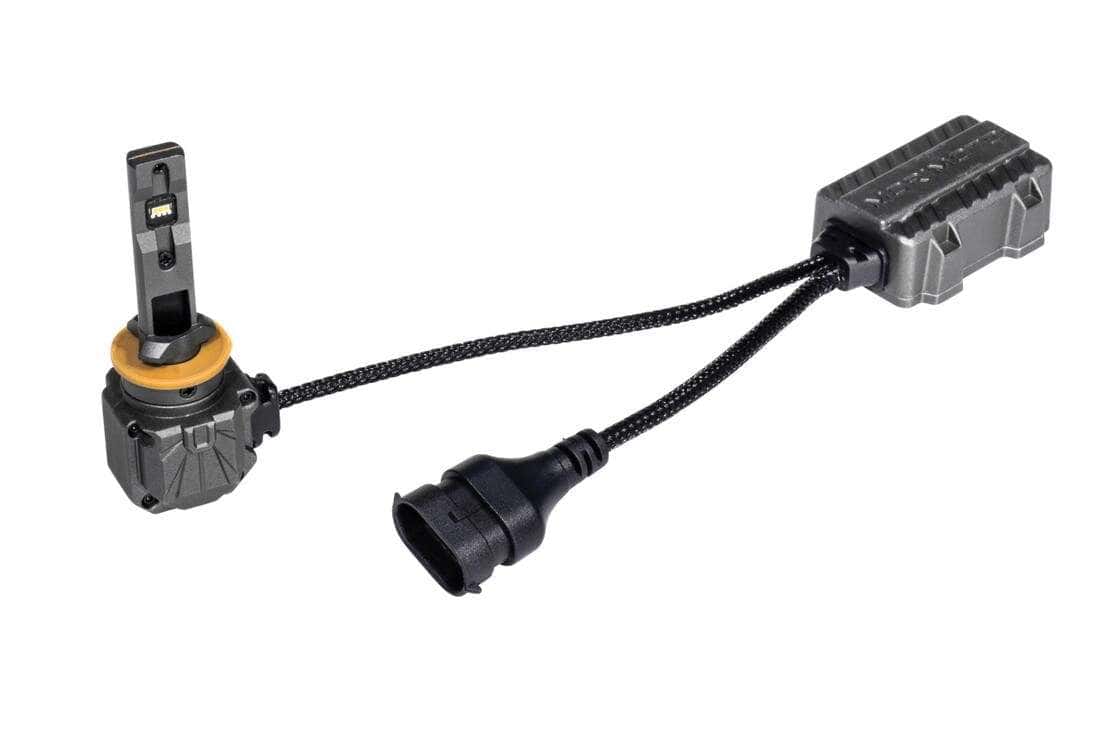
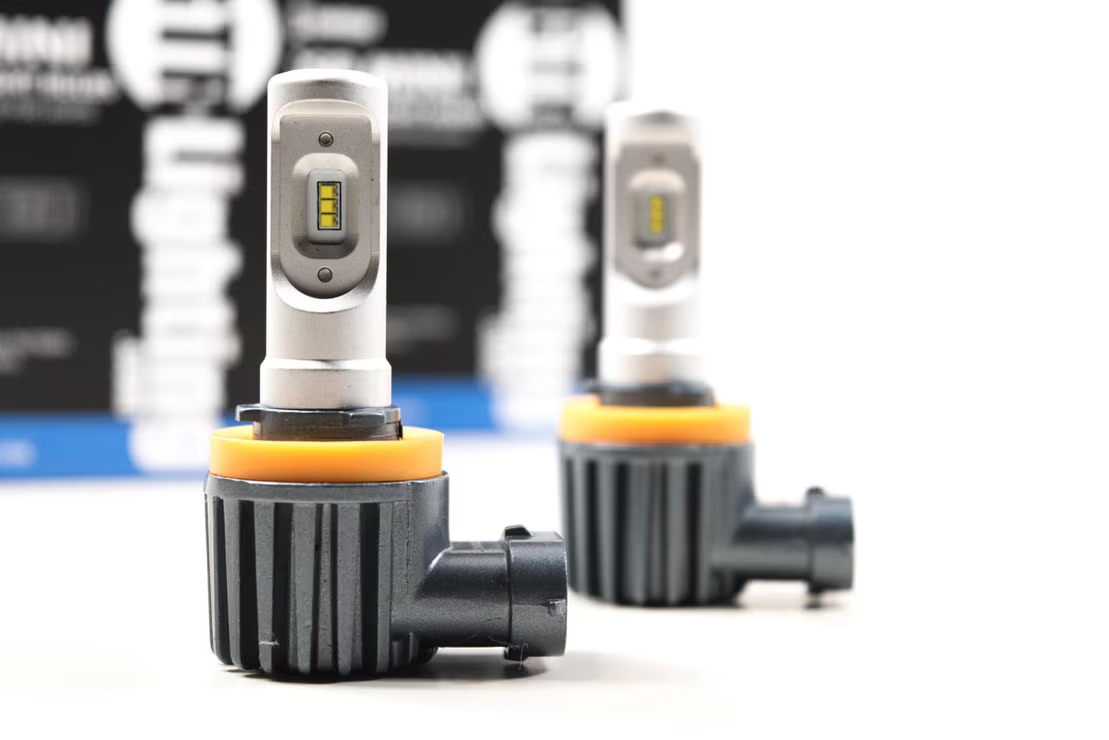
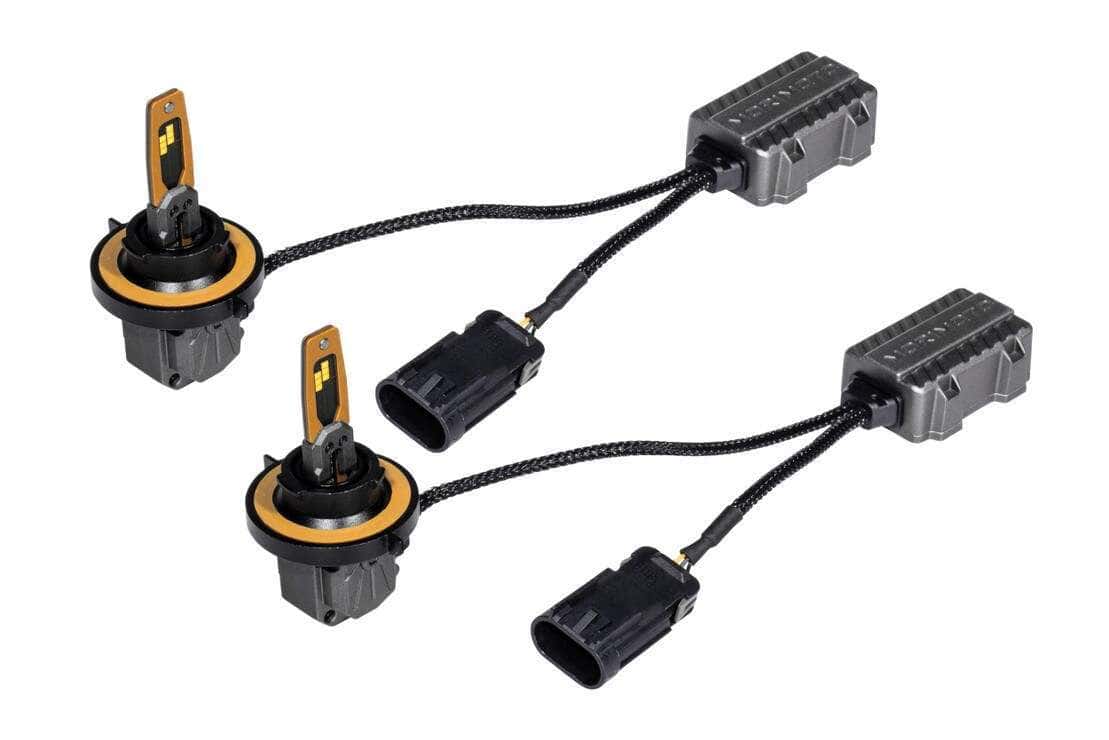
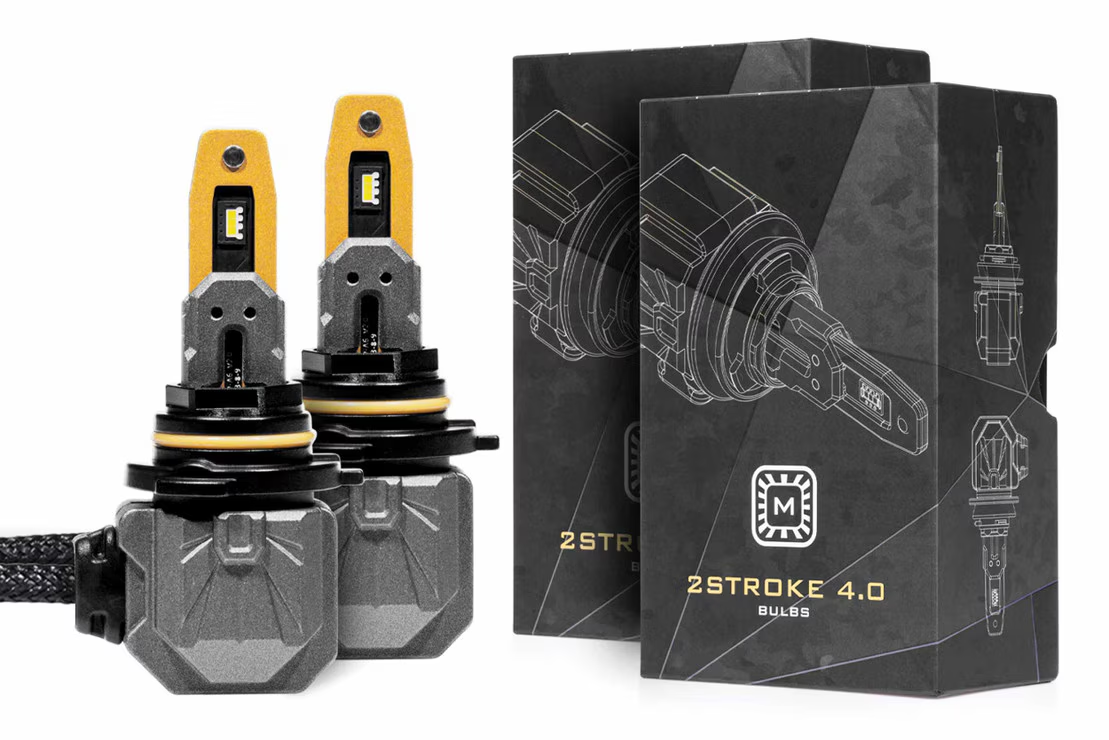
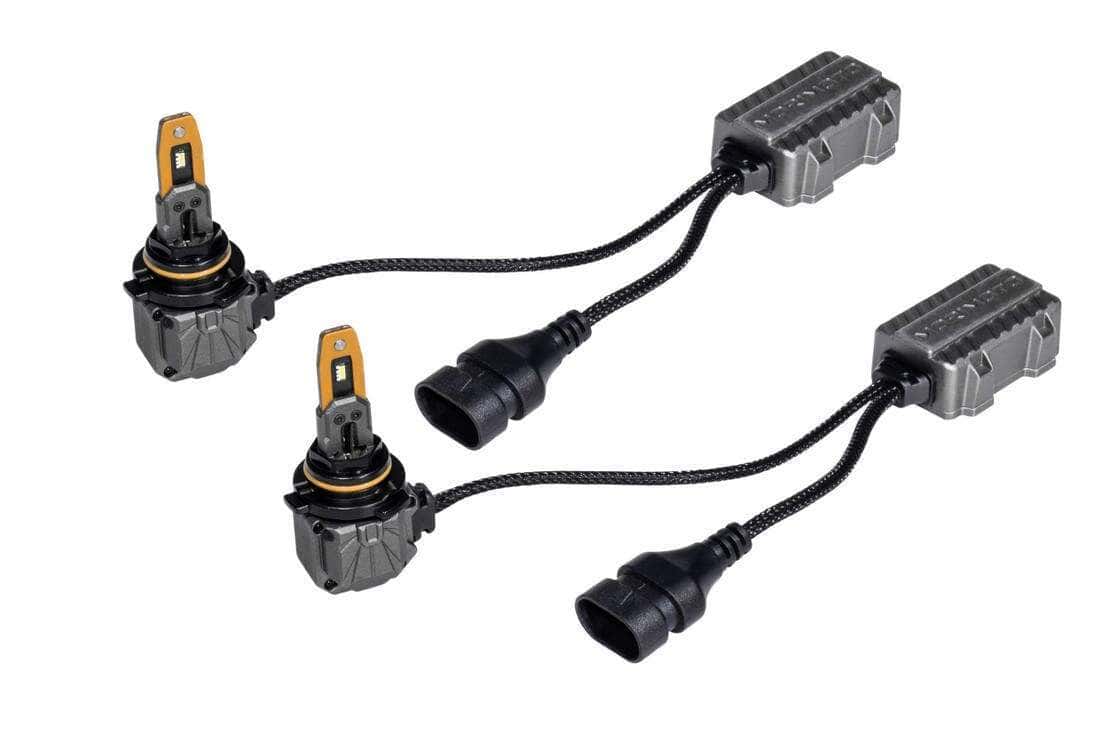
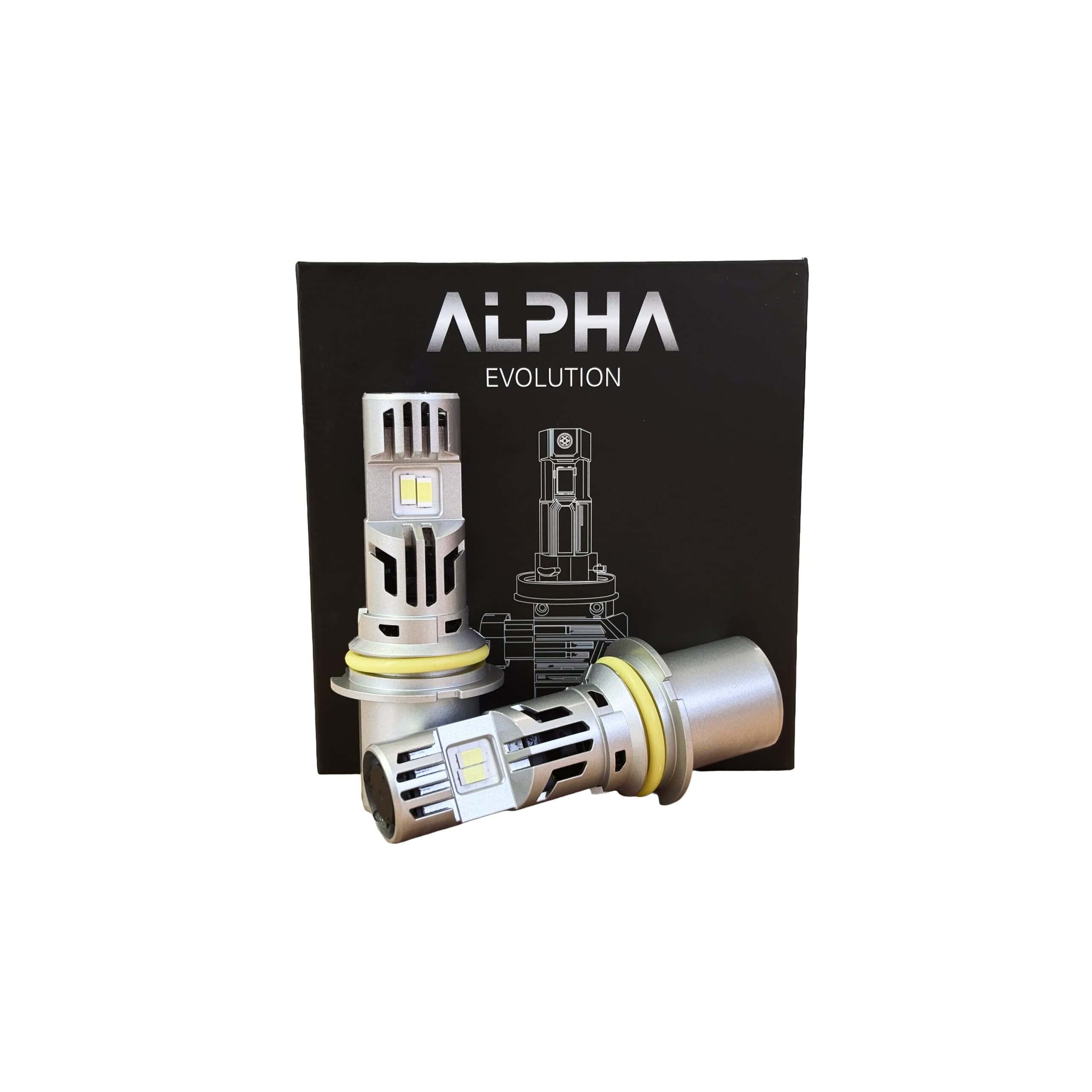
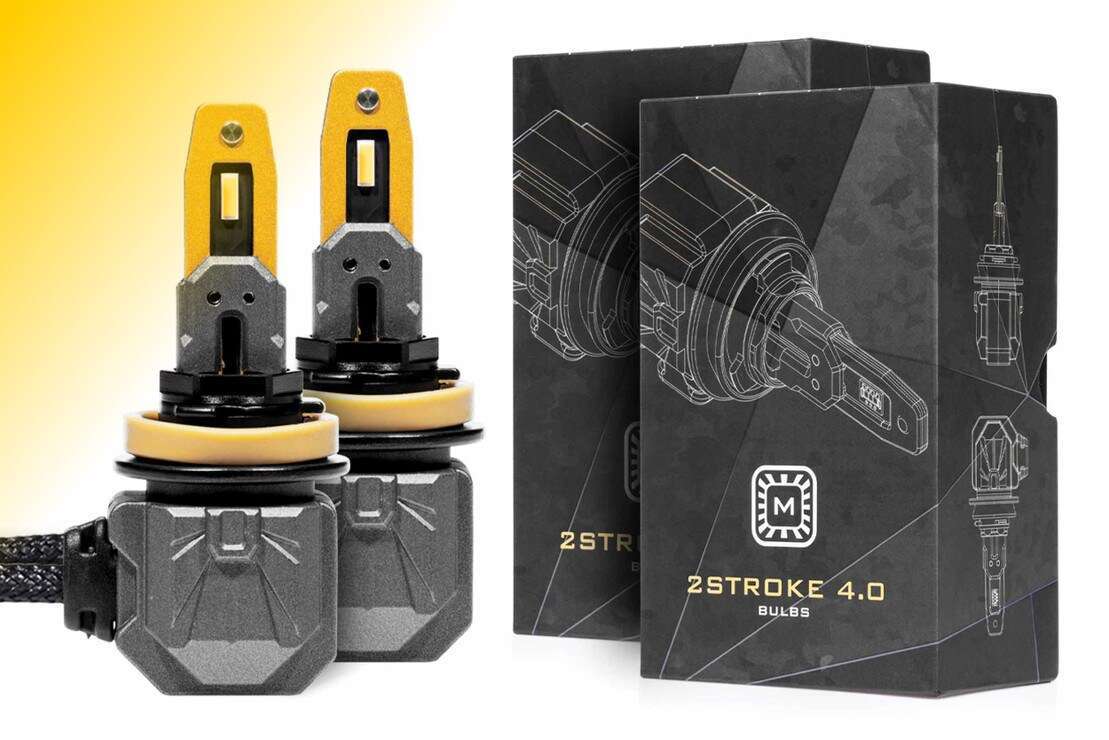
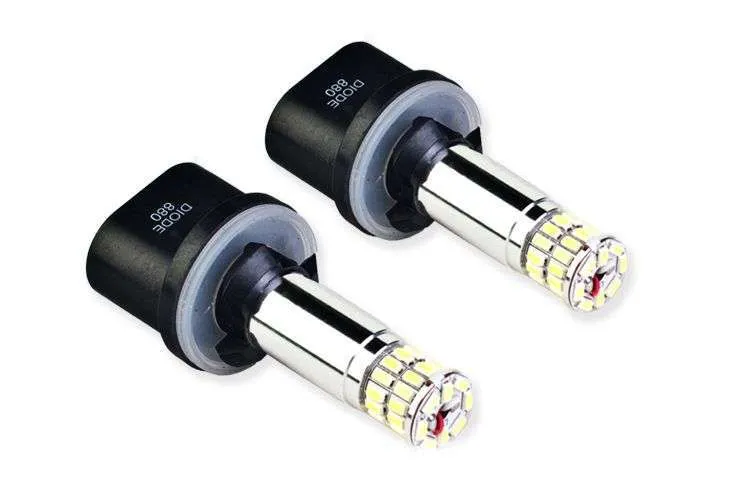
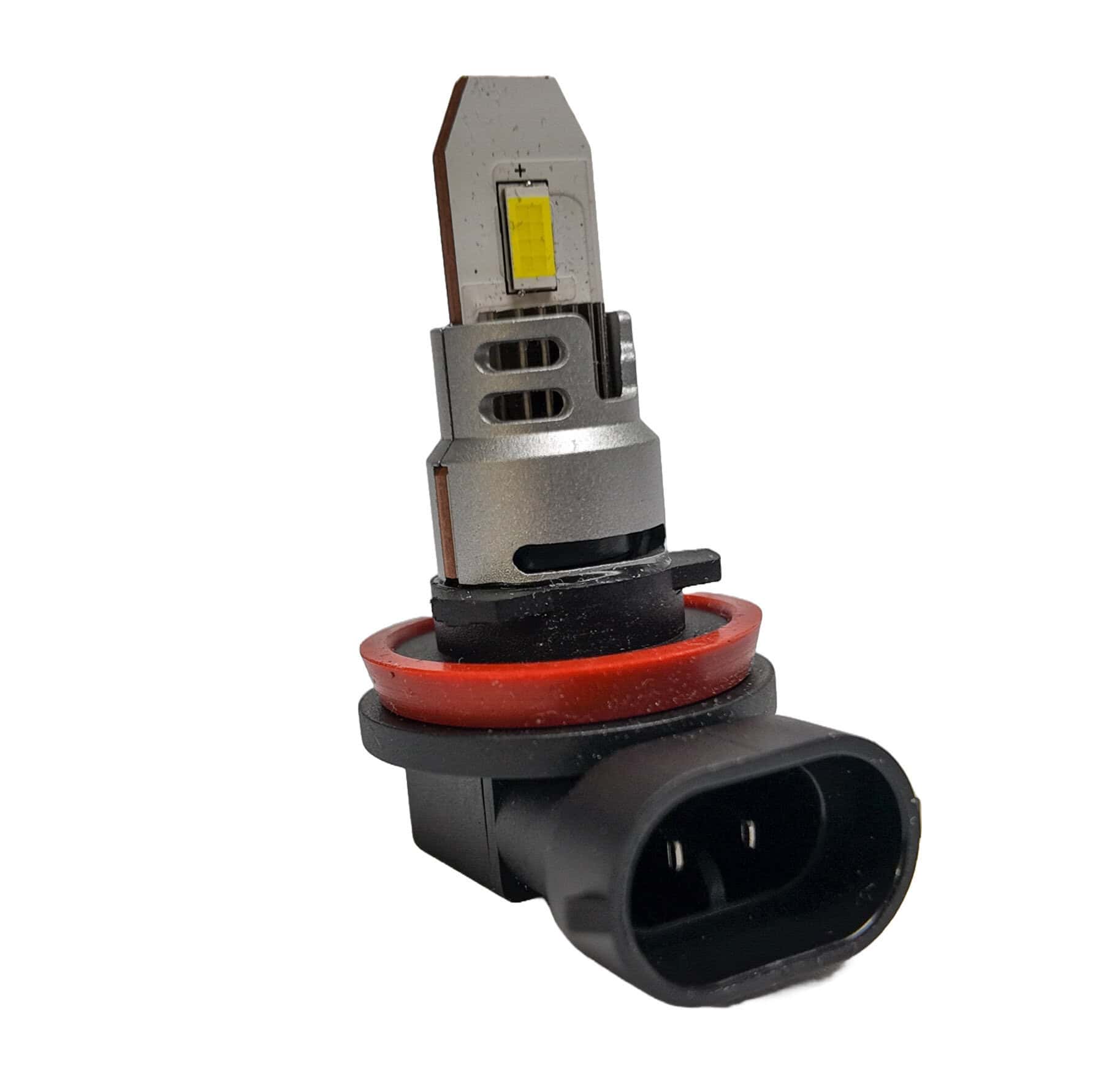
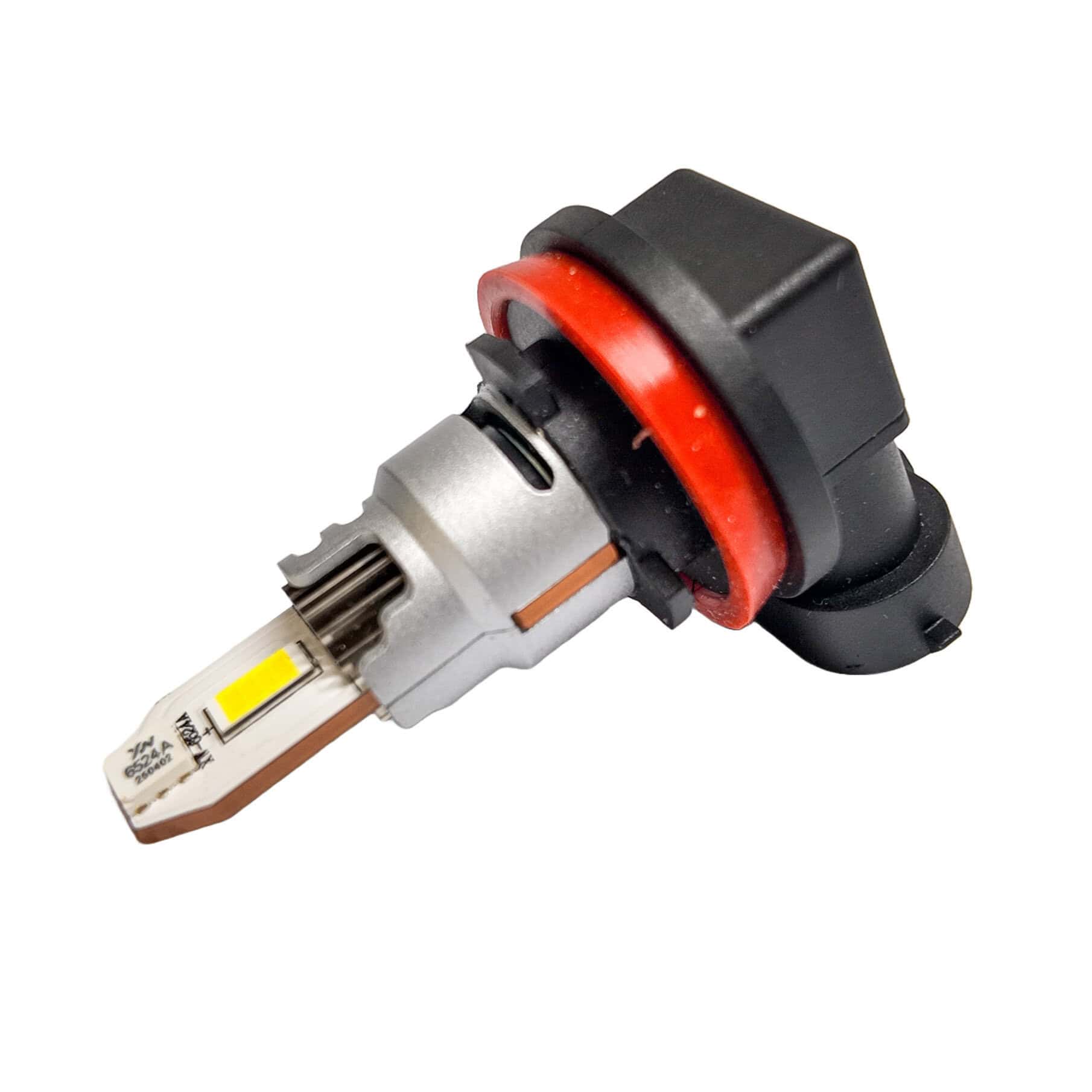
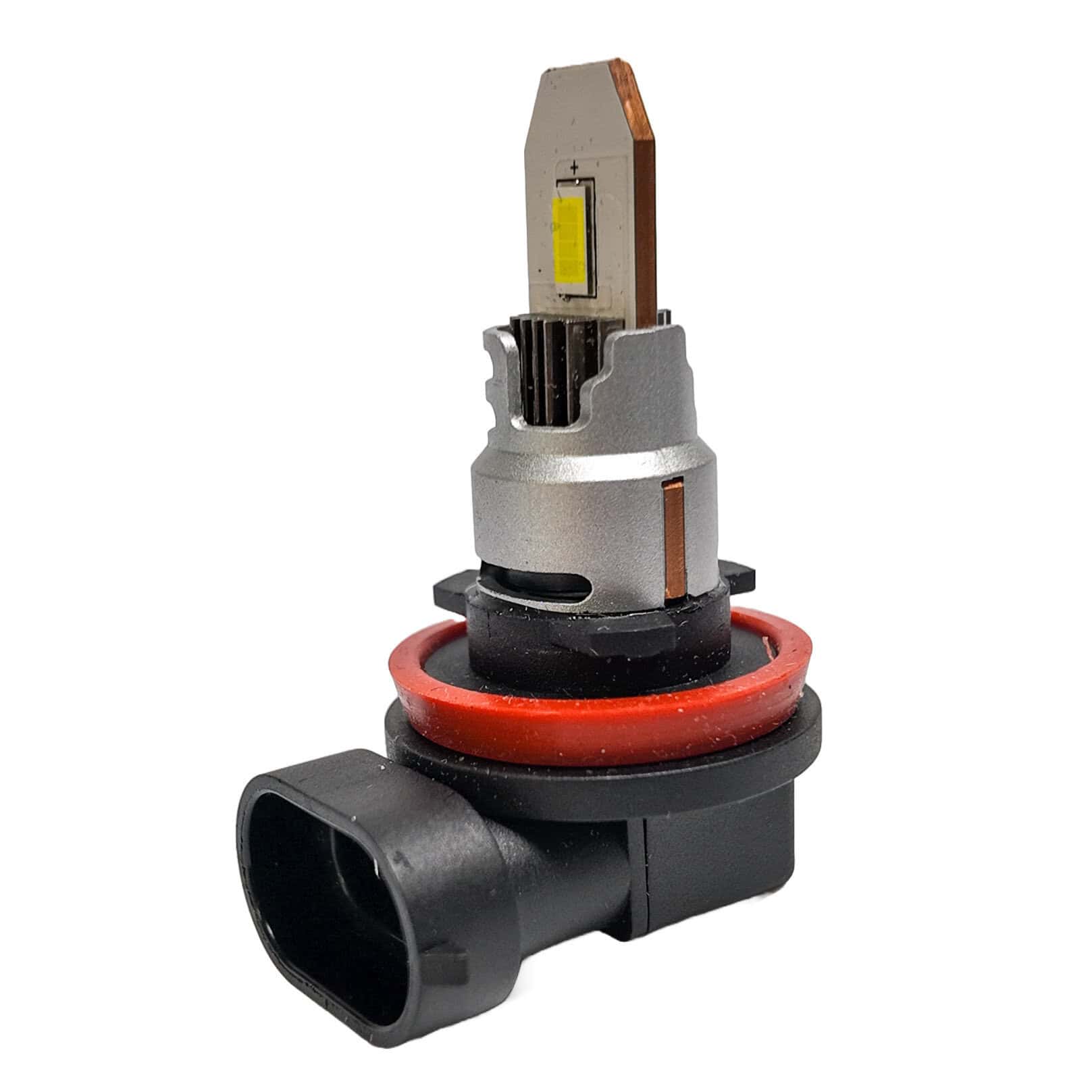
Open PCB design for better optics – The AlphaFit uses an exposed printed‑circuit board with no metal shroud over the front. This lowers the LED chip spacing to just 1.7 mm, comparable to high‑end LED fog bulbs that use ceramic circuit boards with chip spacing around 1.45 mm and output as much as 18–22.5 W. By keeping the board open, AlphaFit avoids the dark void often created by enclosed housings and produces a clean, halogen‑like beam.
-
Efficient cooling without an exposed fan – Competing LED fog bulbs either go fanless, relying on a heavy copper core and metal housing for heat dissipation, or use high‑speed dual fans that protrude into the housing and warm the ambient air. Our bulb encloses a compact internal fan and heat‑sink blade inside a sealed back. The sealed back uses the same PBT plastic found in automotive connectors, which resists heat up to 150 °C and is widely used for under‑hood connectors. This design prevents dirt and debris build‑up, maintains stable brightness and directs a gentle airflow against the lens to discourage ice and snow from sticking.
-
Exact factory fit and orientation – The AlphaFit housing mirrors the shape and material of a standard H8/H9/H11 halogen bulb. Because there is no bulky heat sink in front of the LEDs, the bulb can be inserted at the same angle as the halogen and does not need rotational adjustment. Automotive connectors often use PBT‑based housings that operate between –40 °C and 120 °C, and our bulb retains this durable material for a plug‑and‑play fit.
-
Stable 14 W power draw – Many LED fog lights begin bright but dim as they heat up; some premium bulbs start at 18 W and ramp to 22.5 W. Our 14 W AlphaFit bulb delivers consistent brightness without overdriving the LEDs, maximizing reliability.
-
Legal fog‑light use – Like other LED retrofit bulbs, AlphaFit is not DOT‑approved for headlight use in North America. Leading LED manufacturers note that their retrofit bulbs are only legal for fog‑light applications. Use AlphaFit bulbs in factory fog‑lamp housings to maintain on‑road legality.
-
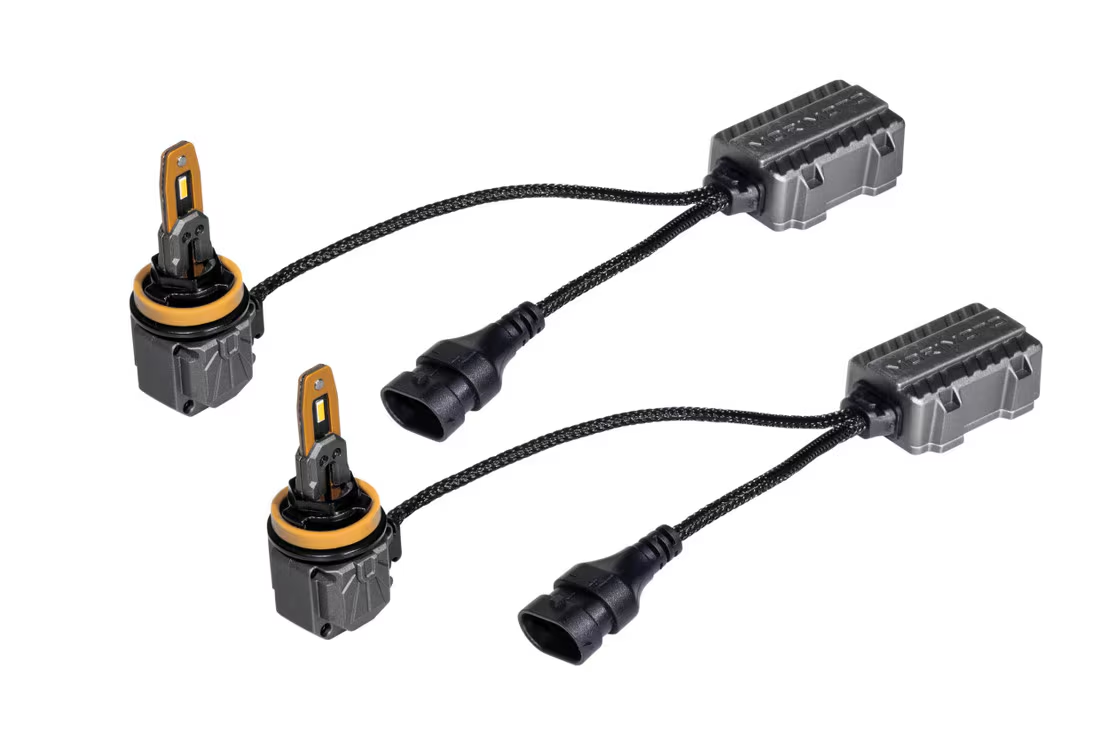
No built‑in resistors or capacitors – Many LED bulbs add resistors and capacitors to prevent flicker or warnings, but those components are common failure points. AlphaFit eliminates them; if your vehicle triggers a “bulb out” warning or flickers, simply add an external CAN‑bus decoder.
Technical Specifications
| Feature | Specification |
|---|---|
| Bulb type | H11 LED (fits H8/H9/H11 halogen sockets) |
| Power | 14 W (stable, no thermal ramping) |
| LED chip spacing | 1.7 mm (open PCB; no lens obstruction) |
| Cooling | Internal sealed fan & heat‑sink blade |
| Housing material | Heat‑resistant PBT plastic (–40 °C to 120 °C operating range) |
| Voltage | 12 V DC |
| Polarity | Non‑polar design — plug either way |
| CAN‑bus | Not built in — external decoder may be required on vehicles with bulb‑out detection |
| Warranty | Lifetime limited warranty |
Vehicle Fitment
AlphaFit H11 LED fog light bulbs are designed to replace H8, H9 or H11 halogen bulbs found in many OEM fog‑lamp housings. The following list highlights vehicles that use these bulb sizes for fog lights. Always verify fitment in your owner’s manual before ordering.
Passenger Cars & Sedans
-
Acura: ILX (2013–2015), MDX (2007–2013) and other models use H11 fog bulbs.
-
BMW: Many 3‑Series and 5‑Series vehicles (e.g., 2006‑2012 3‑Series, 2004‑2010 5‑Series) use H8 or H11 fog lights.
-
Buick: Lacrosse (2005–2013) uses H11 fog bulbs.
-
Cadillac: SRX crossovers (2010–2016) use H11 fog bulbs.
-
Chevrolet: Malibu, Silverado and Equinox use H11 bulbs for low beam and fog lights.
-
Ford: Edge (2007–2010), Escape (2005–2006), Explorer (2011–2015), F‑150 (2015–2016), Focus (2012–2014) and Fusion (2006–2016) use H11 fog bulbs.
-
Honda: Accord, Civic, CR‑V, Pilot and Ridgeline use H11 bulbs for low beam or fog lights.
-
Hyundai: Sonata (low beam) and Tucson (low/fog) use H11 bulbs.
-
Kia: Optima and Sportage use H11 bulbs for low beam and fog lights.
-
Mazda: CX‑5 (low/fog) and Mazda 3 (low beam) use H11 bulbs.
-
Nissan: Altima, Rogue and Sentra use H11 bulbs for low beams or fog lights.
-
Subaru: Outback (low beam) and Forester (low/fog) use H11 bulbs.
-
Toyota: Camry, Corolla, RAV4, Tacoma and Highlander use H11 bulbs for low beams and fog lights.
Trucks, SUVs & Crossovers
-
BMW X‑series: X3 and X5 models use H8 fog lights.
-
Ford: F‑150 (2015–2016), F‑250/F‑350 (2011–2016) and Super Duty trucks often use H11 or H8 fog lights.
-
Chevrolet & GMC: Silverado, Sierra and Equinox use H11 fog lights.
-
Honda & Toyota SUVs: Pilot, CR‑V, RAV4 and Highlander use H11 bulbs for fog lights.
-
Buick & Cadillac crossovers: Buick Lacrosse and Cadillac SRX use H11 fog lights.
Note: This list is not exhaustive. Our AlphaFit bulb will fit any vehicle that uses an H8, H9 or H11 halogen bulb in the fog lights. Check your manual or use an online bulb finder to confirm.
Comparison With Leading LED Fog‑Light Bulbs
| Feature | AlphaFit H11 LED | Premium Dual‑Fan Ceramic Bulb | Premium Fanless Copper‑Core Bulb |
|---|---|---|---|
| Power & brightness | 14 W stable output | Starts at 18 W and increases to 22.5 W; ~2 600 lumens | 14 W power, available in 6 000 K white or 3 000 K yellow |
| Cooling design | Internal sealed fan and open PCB; no front heat sink; sealed back replicates factory halogen shape | High‑speed dual‑layer fan that warms ambient air inside housing; ceramic PCB | Fanless copper‑core PCB with integrated metal heatsink |
| LED chip spacing | 1.7 mm (open board) | 1.45 mm surface‑emission spacing to replicate halogen | Not specified; emphasis on beam focus and compact size |
| Housing | PBT plastic housing; matches H8/H9/H11 halogen bulbs for plug‑and‑play fit | Metal shroud and heatsink require more space; orientation adjustment often needed | Full‑metal housing; larger than halogen |
| Legal use | For fog lights; not DOT‑approved for headlight use (add CAN‑bus decoder if needed) | Only legal for fog lights; not DOT approved | Only legal for fog lights; not DOT compliant |
| Warranty | Lifetime limited warranty | Lifetime warranty | Lifetime warranty |
Frequently Asked Questions (FAQ)
Can I install AlphaFit H11 bulbs in my headlights?
AlphaFit bulbs physically fit any H8/H9/H11 socket, including headlamp housings, but LED retrofit bulbs are usually not street‑legal in headlight applications. Most manufacturers note that their LED bulbs are only approved for fog‑light use. Always verify local regulations before using LED bulbs in headlights.
Do I need a CAN‑bus decoder?
Our bulbs do not include built‑in resistors or capacitors, because those components often fail and shorten the life of the bulb. If your vehicle uses a bulb‑out detection or CAN‑bus system, you may see a warning or experience flickering. In that case, add a plug‑and‑play external decoder to simulate the load.
Will the internal fan get clogged with dirt?
Unlike competitors that use exposed fans at the rear of the bulb, the AlphaFit fan is sealed inside the bulb housing. This prevents dirt and moisture from clogging the blades, ensures long‑term reliability and directs a gentle airflow toward the fog‑lamp lens to help reduce snow and ice build‑up.
Are these bulbs brighter than my stock halogens?
Yes. The AlphaFit H11 bulb uses high‑efficiency LEDs spaced 1.7 mm apart on an open PCB, producing a concentrated beam similar to the halogen filament. While we do not publish raw lumen numbers, our 14 W output provides a crisp, white light that greatly improves visibility compared to a 55 W halogen fog bulb.
How do I install AlphaFit bulbs?
Installation is simple:
-
Turn off your vehicle and allow the fog‑lamp housing to cool.
-
Unplug the factory H8/H9/H11 bulb by twisting it counter‑clockwise.
-
Insert the AlphaFit bulb, ensuring the tabs align with the housing, and twist clockwise to lock.
-
Plug in the wiring connector — the non‑polar design allows connection in either orientation.
-
Test the lights. If you see a dash warning or flicker, add an external CAN‑bus decoder.
What is the bulb made of?
The AlphaFit uses a PBT plastic housing similar to standard halogen bulbs. PBT (polybutylene terephthalate) is mechanically strong and resists heat up to 150 °C, making it ideal for connectors and under‑the‑hood applications. The housing of many automotive connectors is also made of PBT and can operate between –40 °C and 120 °C.